Wikipink - the truth about Klarna in the Netherlands
Traditional lenders are letting consumers down.
This is a problem affecting millions. And it’s about to reach a breaking point. Klarna is different. We give customers fairer, responsible access to credit when they need it. We’re proud of our products and how millions of customers in the Netherlands use them. That’s why we’re happy to make all our lending data public. We hope this sets an example for others in the industry. So far, no other consumer credit provider in the Netherlands has taken this step, but we hope that sharing relevant facts and figures will encourage others to follow suit, so we can tackle the underlying problems together.
Where fair and responsible payment options begin
Since we were founded in 2005 - and launched in the Netherlands in 2010 - we've been working to reinvent shopping and payments. That means making payments and purchases safer and more transparent for all our customers.
Buy now, pay later (BNPL) takes the uncertainty out of online shopping
The Dutch Authority for the Financial Markets (AFM) asked Dutch consumers why they use buy now, pay later (BNPL). For nearly 70%, the main reason is ‘knowing they’re happy with their order’, while more than 50% say it’s about ‘wanting to see the products in person first’.
Buy now, pay later (BNPL) keeps customers’ money in their pockets while they wait for a refund. That matters, as 26% of consumers struggled to get a refund in-store, with many being offered only store credit or facing long waits.
Let’s put things in perspective
Media coverage often overlooks how few purchases are made using BNPL. Demand for Klarna’s products continues to grow, and orders from Dutch consumers have increased by a quarter over the past four years. Yet according to a report from the Dutch Authority for the Financial Markets, just 8 percent of online transactions use BNPL. That’s a much smaller share than traditional forms of credit account for.
The average outstanding balance for Klarna customers is around €87.90. By comparison, the average debt on revolving credit, which lets consumers borrow much more while making only minimum repayments, is €2,913*.
And that’s not the only difference between Klarna and other forms of credit...
Fair and responsible products for consumers
These products offer consumers extra benefits and safeguards, such as Klarna’s Buyer Protection. This means customers don’t have to pay for orders that never arrive or products that don’t match their description.
Pay later
Customers can buy a product and pay within 30 days, with no extra fees or interest. This gives them a chance to check the product before paying for it. It makes online shopping safer. Customers only pay once their item has arrived and meets their expectations.
Pay in 3
With the Pay in 3 option, customers pay the first installment at the time of purchase, the second after 30 days, and the third after 60 days - with no extra fees or interest. This is especially helpful when you unexpectedly need to buy an essential item, like a new washing machine.
Pay now
Pay now lets customers pay for their purchase in full at checkout.
99.4 percent of the credit we provide in the Netherlands is repaid
Reminder fees and collection charges
Share of Pay later transactions with additional fees
Since 2021, the number of orders for which Klarna has charged late-payment fees has fallen significantly. This is thanks to several changes we’ve made to how we communicate with customers. We now send customers up to nine reminders about upcoming payments. Customers can also set up Autopay to automatically pay for their purchases on time.
Number of Pay later transactions referred for debt collection
Klarna sends customers a total of nine payment reminders via the Klarna app and email. Late fees only apply once a payment is 17 days overdue. These fees are capped at a flat €7.50, regardless of the purchase amount. These measures have reduced the number of orders referred to an external debt collection agency. We now refer just 1 percent of all orders to a debt collection agency.
Reminder fees: A nudge, not a business model
97%
How Klarna helps consumers avoid debt traps
Klarna makes a fresh credit decision for every transaction to ensure we only lend to customers who can actually repay us. Whenever a consumer over the age of 18 wants to use Klarna, we make a new credit decision. We use internal data and soft credit checks with agencies such as Experian and Inform Data. Credit approval isn't guaranteed: In 2022, Klarna received 35 million applications in the Netherlands, of which 15 percent were declined.
We start customers with a low credit limit, gradually increase it when they pay on time, and limit access to our services if payments are missed.
We start new customers off with a relatively small amount of credit. We then adjust it based on their payment history, gradually increasing it when they pay on time, or reducing it - and limiting access to our services - when payments are missed. If customers miss a payment, we limit access to our services to help prevent debt from building up. This isn't the case with traditional lenders, whose business model relies on interest earned from overdue payments. By contrast, Klarna charges merchants a small percentage of each transaction in exchange for offering our products.
So it’s in our own interest to offer products to customers who can pay us back on time.
Protecting consumers online and in store
Our interest-free buy now, pay later (BNPL) products help you choose the payment option that best suits your purchase, whether you’re shopping online or in store.
While more than 30% of Klarna transactions are paid in full upfront, we believe credit should be an option when it helps consumers manage their spending.
Wherever you use our products, we apply the same checks and verification processes to protect consumers.
Klarna online BNPL | Klarna’s in-store BNPL | |
|---|---|---|
Customer identification* | ✅ | ✅ |
Age verification* | ✅ | ✅ |
Credit check* | ✅ | ✅ |
Buyer Protection* | ✅ | ✅ |
Klarna autopay** | ✅ | ✅ |
*For every transaction.
**Automatic payments so consumers don’t miss a payment.
Klarna has a zero-tolerance policy on giving minors access to credit.
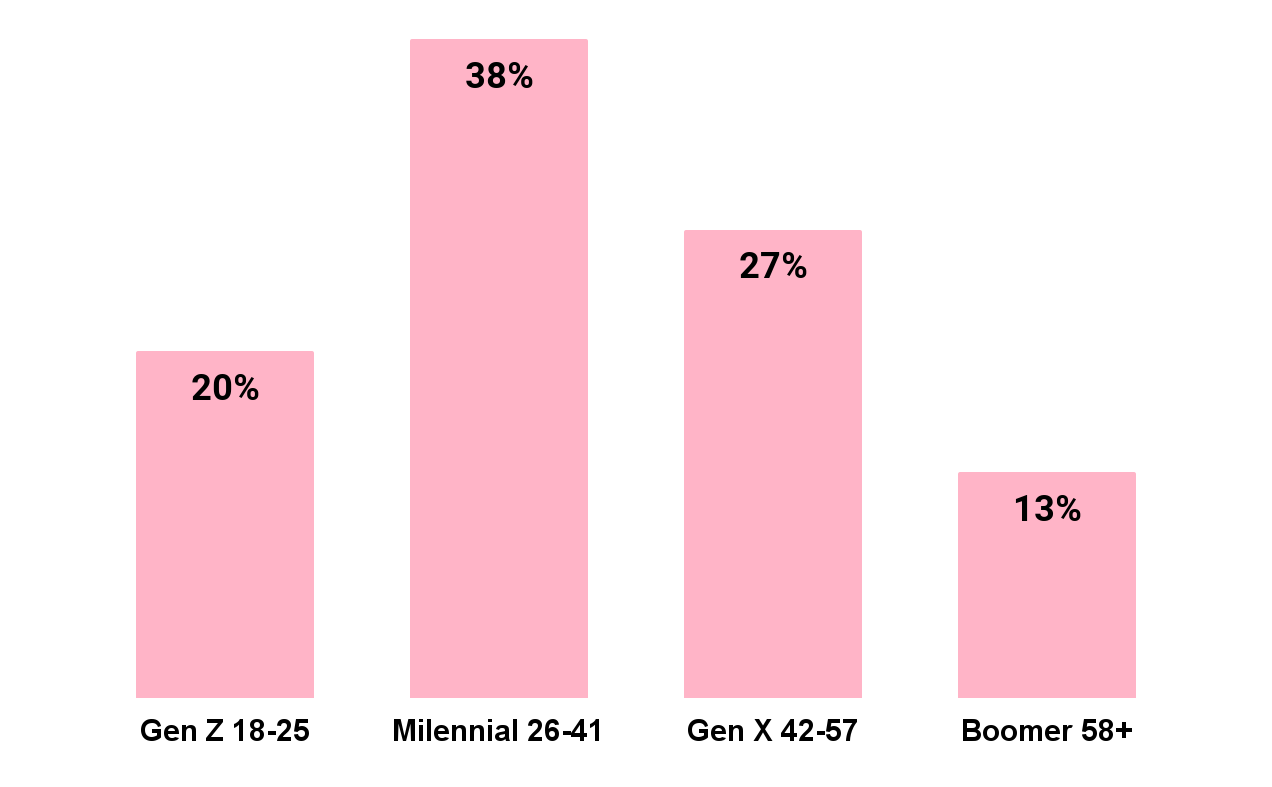
The average age of our Dutch customers is 39. Contrary to popular belief, Gen Z is not Klarna’s largest user group. In fact, it’s our second-smallest. Nearly 40 percent of our customers are millennials (aged 26 to 41), just under 30 percent are Gen X (aged 42 to 57), and 20 percent are Gen Z (aged 18 to 25).
Klarna has a zero-tolerance policy on giving minors access to credit. The industry hasn’t always acted quickly enough to address underage use, but Klarna has. We verify every customer’s age through credit checks, identity documents, and iDIN. Between October 2024 and March 2025, these checks blocked 470,000 unverified users from accessing Klarna (not just minors).
Klarna remains the market leader with fairer rules for all BNPL customers
Klarna holds a European banking license and has a long track record of operating in highly regulated environments across multiple markets. Klarna strongly supports legislation for the buy now, pay later (BNPL) sector to ensure all providers meet the same strict standards.
Working with our partners in the Netherlands, we helped develop the first European buy now, pay later (BNPL) code of conduct, which came into effect on 30 October 2023. This is an important milestone for the industry, aimed at strengthening consumer protection and ensuring all providers offer a responsible BNPL experience. The code requires providers to give clear information about fees, terms, and payment obligations, all things Klarna has been doing for years.
*BKR Schuldenmonitor 2018